
Improved ECMO treatment
A ULB research team had an algorithm that could automatically regulate ECMO flow. They needed hardware to test it. Superellipse engineered a clip-on controller, built six clinical investigational devices, and delivered the full technical documentation for these devices in compliance with ISO 13485 and the MDR.

The challenge
The right algorithm. No hardware to run it.
An ECMO device temporarily takes over heart and lung function in patients recovering from cardiogenic shock. Without support, a failing heart cannot pump enough blood to keep organs alive. ECMO solves that problem, but creates another: because flow is adjusted manually by a physician a few times a day, there is a real risk of overloading the heart. ICU staff are already stretched, and the monitoring and weaning process is time-consuming.
A research team at the Université Libre de Bruxelles developed an algorithm that adjusts the flow automatically based on live physiological parameters: oxygen saturation, arterial pressure, and pressures before and after the membrane. The algorithm had been validated in pre-clinical animal studies. What was missing was hardware developed according to safety guidelines and regulations to bring it into a clinical investigation. Existing ECMO machines must not be modified. The team needed a partner who could design, engineer, and deliver a fully compliant medical device accessory.

Highlights
A clip-on controller that works with any existing ECMO machine, requiring no modification to the device itself.
Six clinical investigational devices with full technical documentation, ready for a pilot study.
A complete technical file, ISO 13485 compliant, covering risk management, EMC testing, usability validation, and low voltage directive testing.
An add-on to existing ECMO devices
Engineering the controller
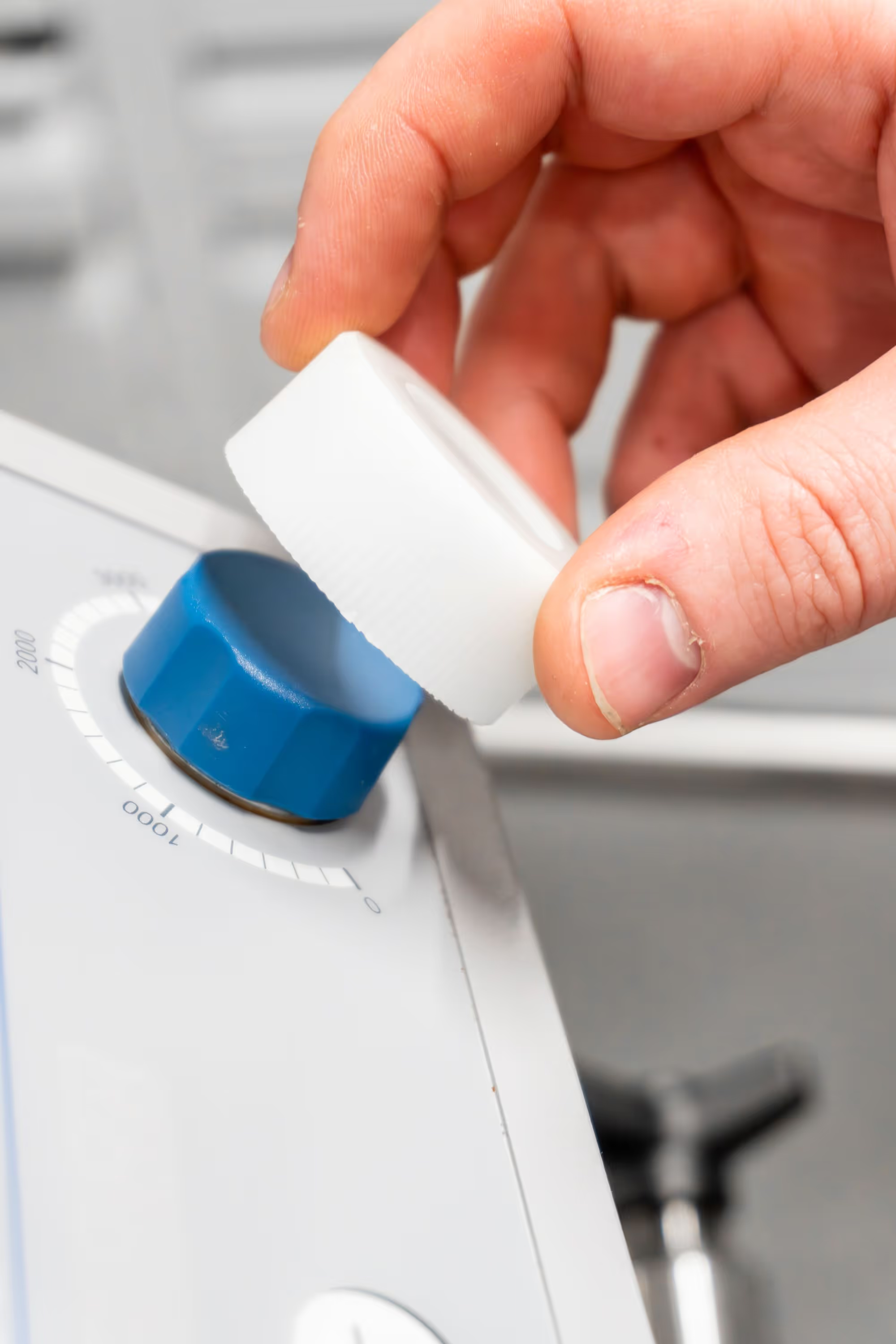
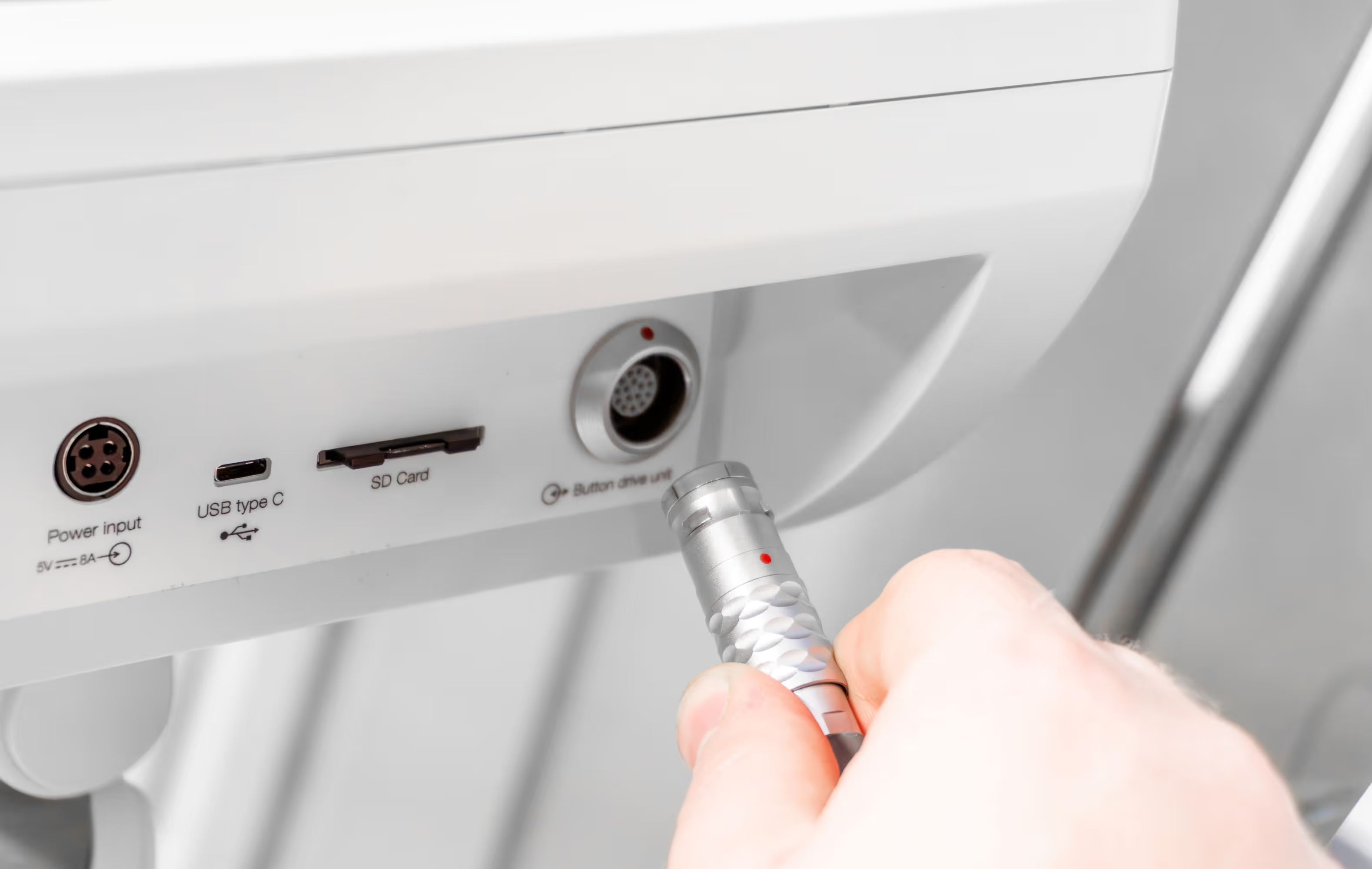
As existing ECMO machines could not be modified, we engineered a button drive unit that connects directly to the flow control knob. A motorized mechanism turns that knob automatically based on the algorithm's output. Manual override is always available to the clinician, without disconnecting anything.
UX/UI: designed for the ICU
The control panel brings all relevant data into a single, clear view: live patient parameters, ECMO flow, pressure readings, and historical trends across a configurable time window.
The interface was designed specifically for high-pressure clinical environments, such as the intensive care unit, where a busy nurse or perfusionist needs to read and act on information quickly, without ambiguity. Visual hierarchy, interaction patterns, and alert logic were all validated through usability testing with clinical end users in mind.


Prototyping and testing
We built iteratively. Intermediate alpha and beta prototypes were delivered throughout the project to validate technical and ergonomic choices before finalizing. The six final clinical investigational devices were assembled in our own facilities and went through a full testing program: product safety testing, EMC testing, low voltage directive testing, risk management documentation, and usability validation.
All of this was delivered within the requested timeline, with tasks running in parallel across engineering, electronics, and design tracks. Full technical documentation for the clinical study was included in the handover.
The Superellipse team demonstrated strong expertise in design engineering, which is crucial for developing a medical device that genuinely responds to clinical needs and end-user expectations. Their methodology was structured across four clearly defined phases, with iterative prototyping and a thorough understanding of the specific challenges of the AETECH project. That combination of technical depth and design thinking was what set them apart.

Evaluation committee
Université Libre de Bruxelles